
How to Get Defined Curls: The Ultimate Guide for All Hair Types
- Chasney

- Jul 11, 2023
- 4 min read
Updated: Jul 15, 2023

Caring for curly hair can be a challenge. Between trying to maintain your hair's moisture, keeping it detangled, and protecting it from damage, styling curls can feel like a full-time job! Not to mention the workout you get each time you style it (that's what keeps my arms toned, no kidding). If you're looking to define your curls or coils, I'm here to help!
The Science Behind Defined Curls
The key to getting perfectly defined curls is recognizing the science behind your hair. Styling your hair according to its porosity can make a world of a difference. There are 3 hair porosity measurements:
Low Porosity: Cuticles on the hair shaft are very close together, making it difficult for moisture to penetrate.
High Porosity: Cuticles are spaced far apart, allowing easy penetration of moisture but difficult moisture retention.
Medium (Normal) Porosity: Cuticles are fairly spaced out, allowing hair to retain moisture well.
How Do I Know My Hair's Porosity?
There's a test for that!
Grab a strand of your shed hair from a brush.
Fill a glass with water.
Submerge the strand of hair into the glass of water.
Wait a few minutes to see whether the strand of hair sinks to the bottom, floats to the top, or stays in the middle.
If the hair stays closer to the top of the glass, you have low porosity hair. If the hair stays in the middle, you have normal porosity hair. If the hair quickly sinks to the bottom of the glass, you have high porosity hair.

Photo Credit: L'ange
Curl Definition Method: The Wash & Go
The term “wash and go” refers to styling your natural curls without further manipulation (heat, stretching, etc.). Unfortunately, it does not mean that you can actually wash your hair and go (my feelings get hurt just thinking about it). Note that any of these products and/or methods can be used on normal porosity hair. Let's get started!
1. Wash Your Hair
Since curly hair tends to be more tangled and unruly, you might wanna wash your hair in sections! Try not to wash your hair more than 1-2x a week as that will dry out your strands and encourage frizz.
Low Porosity Hair: Use warm/hot water to wash as it will help open the hair cuticle. Use a clarifying shampoo such as the TPH Honey Clarifying Shampoo (shoutout to Taraji!) to help eliminate product build-up from the tightly packed hair cuticle.
High Porosity Hair: Opt for a moisturizing shampoo such as the TGIN Moisture Rich Sulfate Free Shampoo. Filling the cuticle with moisture right away will help with smoothing your curls.
2. Condition Your Hair
This is one of the most important steps in this process as the conditioner adds necessary nutrients back into the hair cuticle after washing. If you don't want puffy roots, slap some of the conditioner onto your roots, too!
Low Porosity Hair: Grab a moisturizing conditioner such as the Texture ID Triple Moisture Cream Conditioner and rake it through your wet curls. Bonus: Apply a plastic cap and sit under a hooded dryer for 10-20 minutes to really help the conditioner penetrate the hair cuticle!
High Porosity Hair: To discourage your hair from losing moisture so quickly, grab a protein-packed conditioner such as the Mielle Organics Babassu Oil Mint Deep Conditioner and rake it through your wet curls.
3. Detangle Your Hair
With the conditioner still in your hair, section your hair once again and begin detangling. You can choose to finger detangle or use a tool such as a Denman brush or wide-tooth comb. There is one thing to avoid when detangling curly hair:
Never detangle with a small or fine-tooth comb, unless you wanna snatch your hair out!
Always begin detangling from the bottom of the hair shaft and work your way up to prevent damage.
4. Rinse and Lightly Dry Your Hair
Rinse the conditioner out of your hair and dry it with a cotton t-shirt or microfiber towel. These are gentle on the hair and cause less damage/ frizz. Be careful not to remove too much water from your hair; your hair needs to be fairly wet to help define the curls later on.
5. Apply a Leave-In Conditioner to Your Hair
This will serve as the primer for your curls as you prep them for further styling. Section your hair before application; this will ensure even distribution of the product.
Low Porosity Hair: With a spray bottle, spritz each section of hair with warm water to help keep the hair's cuticle open. Rake a thick, moisturizing leave-in conditioner into your hair, such as the Mielle Organics Pomegranate and Honey Leave-In Conditioner.
High-Porosity Hair: Since this hair type is easily over-moisturized, grab a lightweight leave-in conditioner such as the Mielle Organics White Peony Leave-In Conditioner Spray and rake it through your hair.
6. Apply A Curl-Defining Gel or Cream to Your Hair
If you have high porosity hair, be sure to add an oil to your hair after this step to seal in the moisture! There are 3 main curl-defining product application methods:

Rake the product through your hair by cupping each section in between both of your hands and smoothing downward.
2. Shingling Method:

Rake the product through your hair in small sections, focusing on smoothing out the roots.

Rake the product through the hair, then go through and twist each curl around your finger for extra definition.
7. Dry Your Hair
It is best to let your hair air-dry or use a diffuser so that your newly-defined curls are not disturbed too much. Once your hair is dry, try not to touch it! Don't run your fingers through your hair unless you want to undo all your hard work!
8. Preserve Your Curls While You Sleep
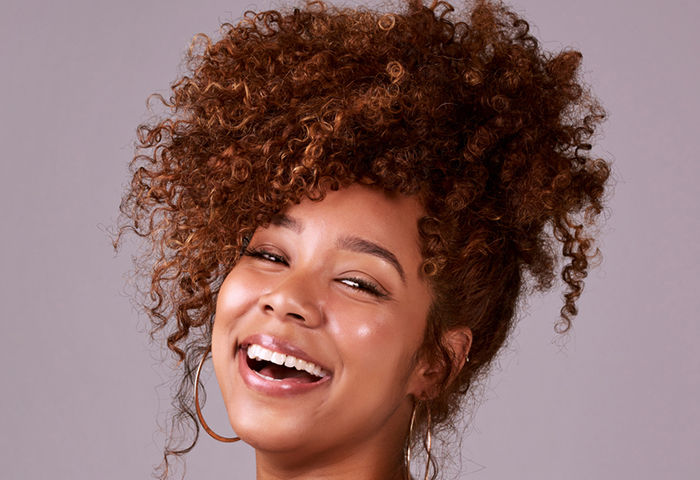
"Pineapple" your hair by putting it into a loose, high ponytail. Then, be sure to sleep in a satin scarf/bonnet, or sleep on a satin pillowcase.
What Did We Learn Today, Class?
Creating defined curls goes beyond the surface, starting with your hair's porosity. Once you can identify your hair's porosity, choosing products is a lot easier to do. My next article will cover the best product combinations for both low and normal porosity, type 4 hair. Stay tuned!
Too Blessed to be Stressed,
Chasney


Comments